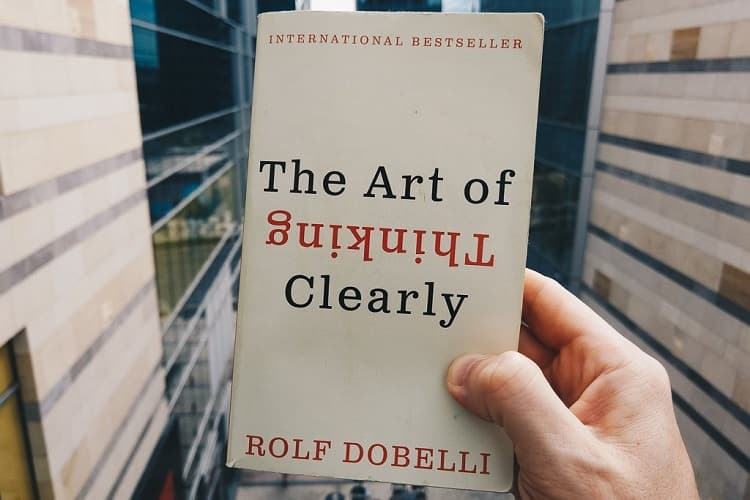
The Art of Thinking Clearly” by Rolf Dobelli, and it is a non-fiction book focused on decision-making and critical thinking, offering insights into avoiding common cognitive biases

English
The Art of Thinking Clearly by Rolf Dobelli explores how our minds often trick us, leading to poor decisions. The book examines over 90 cognitive biases and behavioral errors, providing real-life examples for each, and teaches us how to avoid them.
Key Cognitive Biases:
- Confirmation Bias:
We tend to accept information that confirms our pre-existing beliefs and ignore contradictory evidence.
Example: An investor focuses only on positive news about their stock and dismisses warnings. - Halo Effect:
We generalize one positive or negative trait to a person or product.
Example: A charismatic manager is assumed competent in all areas, even without skills. - Sunk Cost Fallacy:
We continue investing time, money, or effort into something because we already invested, even if it no longer benefits us.
Example: Watching a boring movie just because you paid for the ticket. - Groupthink:
We agree with group decisions, even if wrong, to avoid conflict or disapproval.
Example: Wrong business decisions in teams or boards. - Availability Bias:
We estimate the likelihood of events based on recent experiences or memorable examples rather than actual statistics.
Example: After seeing news of a plane crash, thinking flying is extremely dangerous.
Final Takeaway:
Our minds are not always rational. Recognizing these biases helps us make more informed decisions, evaluate risks better, and avoid repeated mistakes. The art of thinking clearly means learning to control your mind and be less deceived by fleeting thoughts and emotions.
Finglish
Ketab “The Art of Thinking Clearly” neveshte Rolf Dobelli neshan mide ke zehne ma aghlab ma ra faryb mide va ma tasmimat-e eshtebah migirim. Ketab bishtar az 90 khata-ye shenakhti va suibehaye raftari ra sharh mide va mesal-ha-ye vaghei mide, va be ma yad mide chetor az anha jelogiri konim.
Suibehaye mohem:
- Suibeh-ye Ta’id (Confirmation Bias):
Ma tendel darim etela’at-i ra ke bavar-haye ghabli ma ra ta’id mikonad, pazirim va shواhid-e mokhalef ra nadide migirim.
Mesal: Sarmayeh-guzar faghat be akhbar mosbat darbare sahamash tavajoh mikonad va hoshdar-ha ra nadide migirad. - Asar-e Haleh (Halo Effect):
Ma yek vizhegi mosbat ya manfi ra be kol shakhsiyat ya mahsul ta’min midahim.
Mesal: Modir karizmatik ra laiq dar hame mavared midanim, hatta agar maharat nadashte bashad. - Khata-ye Hazine-ye Az Dast Rafte (Sunk Cost Fallacy):
Ma edame midahim baraye chizi ke zaman, pul ya enerzhi dar an sarmayeh gozarim, hatta agar be ma naf’e nadasht bashad.
Mesal: Tamashaye film khast konande faghat baraye hazine bilet. - Asar-e Goruh (Groupthink):
Ma ba tasmimat-e goruh movafeqat mikonim, hatta agar eshtebah bashad, baraye ijad kargardan va estefade az ray-e goruh.
Mesal: Tasmimat eshtebah dar tim-ha ya hey’at modire. - Suibeh-ye Dastresi (Availability Bias):
Ma ehtemal roydadha ra bar asase tajrobeh-haye akhar ya namoone-haye khatermand, na data-ye vaghei, arzyabi mikonim.
Mesal: Pas az didan akhbar tasadof-e havaei, fekr mikonim parvaz besyar khatarناک ast.
Natijeghiri Payani:
Zehn ma hamishe manteqi amal nemikonad. Shenasayi in suibeh-ha be ma komak mikonad tasmimat agahane-tar begirim, risk-ha ra behtar arzyabi konim va az eshtebahat-e tekrar-i jelogiri konim. Honar-e shafaf andishidan yani yad gereftan chetor zehne khod ra kontrol konim va kamtar faryb afkar va ehsasat lahze-i ra bokhorim.
فارسی
کتاب «هنر شفاف اندیشیدن» نوشته رولف دوبلی نشان میدهد که ذهن ما اغلب ما را فریب میدهد و باعث تصمیمگیری اشتباه میشود. این کتاب بیش از ۹۰ خطای شناختی و سوگیری رفتاری را توضیح میدهد و با مثالهای واقعی راهکارهایی برای اجتناب از آنها ارائه میکند.
چند سوگیری مهم:
- سوگیری تأیید (Confirmation Bias):
تمایل داریم اطلاعاتی که باورهای قبلیمان را تأیید میکنند بپذیریم و بقیه را نادیده بگیریم.
مثال: سرمایهگذار فقط اخبار مثبت درباره سهام خود را میبیند و هشدارها را نادیده میگیرد. - اثر هالهای (Halo Effect):
تمایل داریم یک ویژگی مثبت یا منفی را به کل شخص یا محصول تعمیم دهیم.
مثال: یک مدیر کاریزماتیک را در همه زمینهها توانمند فرض میکنیم، حتی اگر مهارت نداشته باشد. - خطای هزینه از دست رفته (Sunk Cost Fallacy):
ادامه دادن به سرمایهگذاری زمانی، مالی یا انرژی در چیزی فقط به دلیل سرمایهگذاری قبلی، حتی اگر به نفع ما نباشد.
مثال: تماشای یک فیلم خستهکننده فقط به خاطر هزینه بلیت. - تفکر گروهی (Groupthink):
موافقت با تصمیم گروه حتی اگر اشتباه باشد، برای جلوگیری از تضاد یا مخالفت.
مثال: تصمیمات اشتباه تیمهای کاری یا هیئت مدیره. - سوگیری دسترسی (Availability Bias):
ارزیابی احتمال رخداد یک رویداد بر اساس خاطرات یا نمونههای اخیر، نه داده واقعی.
مثال: بعد از دیدن اخبار سقوط هواپیما، فکر میکنیم پرواز خیلی خطرناک است.
نتیجهگیری پایانی:
ذهن ما همیشه منطقی عمل نمیکند. شناخت این سوگیریها کمک میکند تصمیمات آگاهانهتر بگیریم، ریسکها را بهتر ارزیابی کنیم و از اشتباهات تکراری جلوگیری کنیم. هنر شفاف اندیشیدن یعنی یاد گرفتن اینکه چگونه ذهن خود را کنترل کنیم و کمتر فریب افکار و احساسات لحظهای را بخوریم.